Promenade Politics: Can the UK Really Pull Off a Havana-Style Malecón?
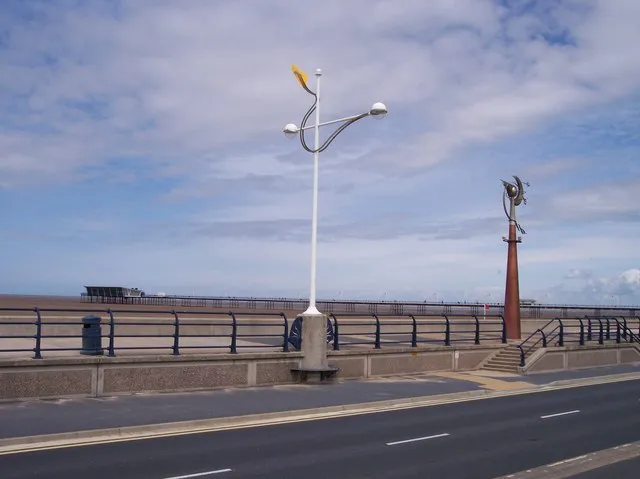
Photo: Raymond Knapman, CC BY-SA 2.0, via Wikimedia Commons
Havana's Malecón at midnight is not an event. It is a habit. People lean on the sea wall, share a bottle, argue, flirt, play a guitar badly, walk a dog, watch the water. Nobody has bought a ticket. Nobody is checking a guest list. The promenade works because it is public, free and slightly untidy. It is a living room with a sea view.
UK promoters have noticed. In 2026, open-air Latin sessions are appearing along canals, docks and seafronts, all chasing a bit of that Malecón feeling. Some are lovely. Some are just a speaker, a Cuba flag and a hopeful promoter. The question is whether UK waterfronts can handle a Havana-style paseo without turning it into a theme night.
The Malecón Is Not a Venue
The first mistake is to treat the Malecón as a stage. It is not. It is a promenade: a place people pass through, stop on, return to. The music is incidental until it is not. A trio starts, a crowd gathers, someone dances, someone else complains about the noise, and the whole thing dissolves. That looseness is the point.
UK waterfronts are managed spaces. A towpath is not a plaza. A seafront is not a club. A dock is not a public square with a built-in audience. The moment you add a PA and a flyer, you are in the world of premises licences, street trading consents, noise abatement notices and public spaces protection orders. The paperwork is the headliner.
That does not mean it cannot work. It means the promoters who succeed will be the ones who stop pretending the UK is Havana and start designing for the UK instead.
The Winter 2026 Experiments
The most interesting test is in London. Ruta del Canal, a monthly paseo along the Regent's Canal from Hackney Wick towards Broadway Market, is trying to keep the format small. There is an acoustic son trio, one modest amp and a headphones option for the later sets. The idea is to let the music move with the walk rather than pin it to a stage.
Elena Ortiz, one of the organisers, says the point is not to recreate a Cuban night. 'We are not trying to build a little Havana,' she says. 'We are trying to see if a canal can hold the same kind of unforced social life. That means low volume, no barriers and no pressure to stay.'
Manchester's Castlefield Basin has hosted a series of early-evening sessions under the railway arches, programmed by Noche Abierta. The music is boleros, son and soft Latin jazz, and the events finish well before the last trains. Leeds has a similar experiment at Granary Wharf, run by the Leeds Latin Collective, with an acoustic setup and a deliberately family-friendly early slot. Brighton's seafront sessions are more weather-dependent, which is another way of saying they are often cancelled.
Liverpool's dockland has the scale for a proper waterfront paseo, but the city's promoters are still working out how to do it without turning the Albert Dock into a shopping-centre soundtrack. The early signs are promising: small crowds, local musicians, a pay-what-you-can model.
Weather, Noise and the Last Train
The barriers are not abstract. The UK winter is not a Havana night. Rain on a waterfront is not romantic; it is a licensing problem with hypothermia. Wind turns a modest PA into a noise complaint. Darkness arrives early, which makes lighting, safety and transport more difficult.
Noise is the most sensitive issue. Waterfront flats are expensive, and their residents know how to complain. A promoter who ignores them will not last long. The successful events are the ones that talk to residents early, set sensible sound limits and accept that a waterfront is not a private party.
Transport is the other hard limit. The Malecón works because people can drift home at any hour. In the UK, the last train leaves before the last song. Night buses exist, but they are not a paseo. Taxi surges turn a free event into an expensive night out. Any promoter serious about a late-night waterfront culture has to solve the journey home, not just the sound system.
The Authenticity Trap
Authenticity is where many of these experiments will fail. A few strings of lights and a Cuban flag do not make a Malecón. Fake palm trees and a mojito menu do not either. The Malecón is authentic because it is not selling anything. It is mixed-age, unpolished and open to people who are not there for the music.
UK promoters should resist the urge to theme the waterfront. The best events will feel like a walk that happened to have music, not a gig that happened to be outside. That means local Latin musicians rather than a tribute act, low barriers rather than VIP pens, and a programme that allows people to join and leave without feeling like they have missed the main event.
It also means accepting that the UK paseo will be different. It will be earlier. It will be more weather-dependent. It will need covered spaces and sensible sound. None of that makes it less authentic. It makes it local.
What Would Make It Work
The UK can handle a Havana-style waterfront night, but only if promoters treat the waterfront as a shared living room rather than a venue. That means covered areas for rain, late transport partnerships, proper sound engineering, community liaison and a programme that mixes music with the simple pleasure of being outside after dark.
The winter 2026 experiments are worth watching because they are testing all of this in public. Some will fold. Some will be lovely. The ones that last will not be the ones with the biggest speakers. They will be the ones that understand the Malecón test is not about whether a UK canal looks like Havana. It is about whether a UK waterfront can become a place where people want to stay a little longer, without a ticket and without a stage.