Cortado Hour: The UK Latin Nights That End at the Coffee Counter
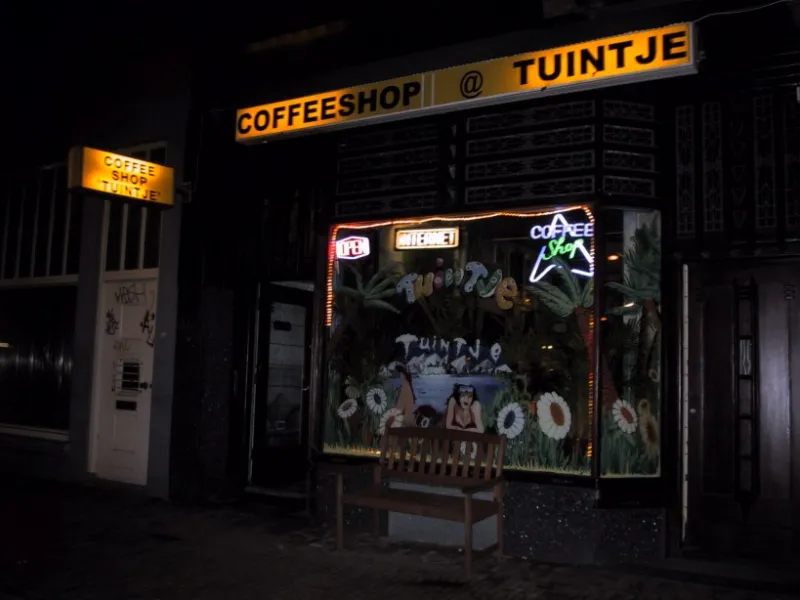
Photo: No machine-readable author provided. Lofor assumed (based on copyright claims)., CC BY-SA 3.0, via Wikimedia Commons
At 4:07 on a Sunday morning in Dalston, the bass has stopped, the coats are on, and nobody is going home. A queue forms at a narrow counter off Kingsland Road. The order is not a pint. It is a cortado, sometimes a colada to share, always with a glass of water and a packet of something sweet. The DJ has packed down. The dancers are still talking. This is the new final set of UK Latin nightlife, and it is being played on a coffee machine.
The 4AM Cortado Is the New Encore
In Havana, coffee is not an afterthought. It is the punctuation mark at the end of a long night: a cafecito before the walk home, a colada passed around a doorway, a small cup that buys another twenty minutes of company. In the UK, that habit is quietly taking root around Latin nights. Promoters have noticed that the crowd does not always want to spill straight into a taxi. It wants a table, a lower volume and one last conversation.
Lila Moreno, who runs the London Latin night Sonido Sur, says the shift started with practical questions. 'People do not want the night to end in a taxi queue,' she says. 'They want a small cup and one more conversation. The coffee stop is the only part of the night where nobody is performing.'
DJ Rafa Nieto puts it more simply. 'I play the last record, then I go and get a cortado,' he says. 'It is the only way I know the room has actually finished.'
London: Dalston, Soho and the Espresso Queue
London is where the ritual is most visible, partly because the city has enough late licences to make it possible and enough Latin nights to make it necessary. Café Medianoche, a narrow bar-café off Kingsland Road, has become a Sunday-morning landmark for dancers coming off nights in Dalston and Hackney. The grinder stays on late, the lights are low, and the crowd is a mix of people still in dance shoes and people who have just finished a shift.
In Soho, the counter at Barrio Sur does something similar with less floor space and more noise. It is not a café in the daytime sense. It is a bar corner with a coffee machine, a few stools and a door that stays open long after the music has moved on. The cortado is the default order. The colada is for tables that have decided to stay another hour.
The catch is that London's late-night coffee map is still small. Most cafés close before the clubs do. A handful of bars keep the grinder on as a courtesy. The result is patchy: a great after-hours coffee stop in one neighbourhood, a closed shutter in the next. That patchiness is part of the charm for now, but it is also the reason the ritual has not yet become a proper scene.
Manchester: The Northern Quarter's Second Shift
Manchester's version is more homemade. Noche Norteña, a monthly Latin night in the Northern Quarter, has started putting coffee recommendations on its flyers. Marta Ruiz, one of the promoters, says the after-party used to mean someone's flat. Now it often means a café table.
'We started telling people where to go for coffee,' she says. 'Now the café is part of the flyer. It is not a gimmick. It is where the night actually ends.'
The spots are not always obvious. Café Aji in Ancoats keeps a late-ish weekend service with a short coffee list and a warm tortilla if the kitchen is still going. Barrio Caffeine on Thomas Street is more of a bar corner than a café, but the espresso is good and the staff do not rush anyone out. The crowd is smaller than in London, which makes the conversation easier and the ritual feel less like a queue.
Leeds: Call Lane's Quiet Corner
Leeds has a similar energy, with less fuss. La Cantina near Call Lane has become a low-key meeting point for dancers coming off nights at venues around the calls. The coffee is simple, the seating is limited, and the atmosphere is closer to a living room than a late-night bar.
Dani Cruz, a Leeds DJ who plays Latin sets across the city, says the coffee stop suits the city's scale. 'In Leeds, the after-party used to be a house,' he says. 'Now it is a table by the window. You can actually hear each other.'
Granary Wharf has also started to feature in the conversation, especially when the weather is dry enough to walk between the stations and the water. It is not Havana. But at 4AM, with a cortado in hand and a group still arguing about the last song, the difference matters less than you might think.
Why the Ritual Works
Part of the appeal is practical. A coffee is cheaper than another round. It lowers the tempo. It gives sober dancers somewhere to go. It also solves a very British problem: the night often ends too abruptly, with a hard lights-up and a rush for the last train.
The cortado stop stretches that ending. It is not about caffeine. It is about permission to stay a little longer. In Havana-style nightlife, the last room is rarely the loudest one. It is the room where the night is processed, where numbers are exchanged, where the DJ finally sits down.
As winter 2026 tightens its grip, the ritual is moving indoors, but it is not disappearing. If anything, the colder months make the coffee stop more appealing. A warm cup, a small table and a few familiar faces are a better ending than a plastic tray and a fluorescent kebab counter.
The last room of a UK Latin night may not look like Havana. But the impulse is the same: do not let the music end without a final, quieter hour. The cortado is doing the work. All it needs is a table and a door that stays open.