The Pause Is the Point: Why UK Latin Floors Need Less Show and More Soul
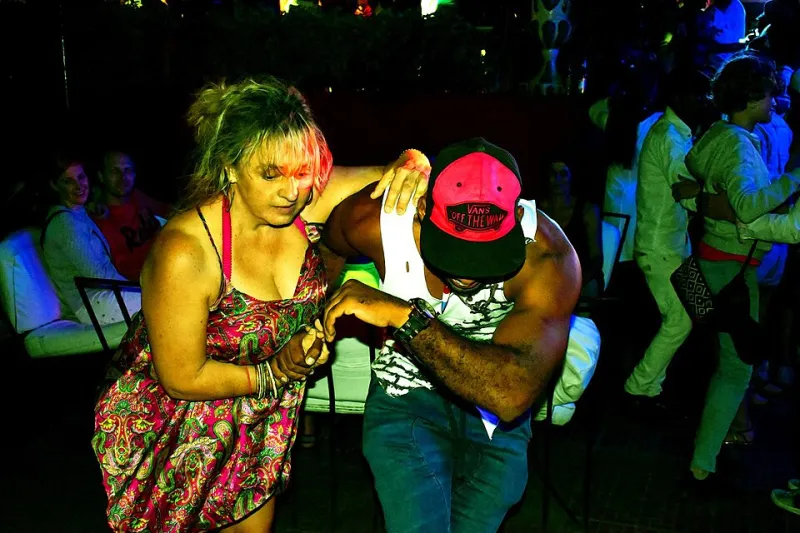
Photo: Yoeztudioz, CC BY 3.0, via Wikimedia Commons
Walk into a UK Latin social this autumn and the floor can feel like an exam. Couples lock into long turn patterns, count silently, unravel a pretzel, reset, repeat. Shines are delivered like party pieces. The best dancers, by consensus, are the ones with the most moves. The room applauds complexity.
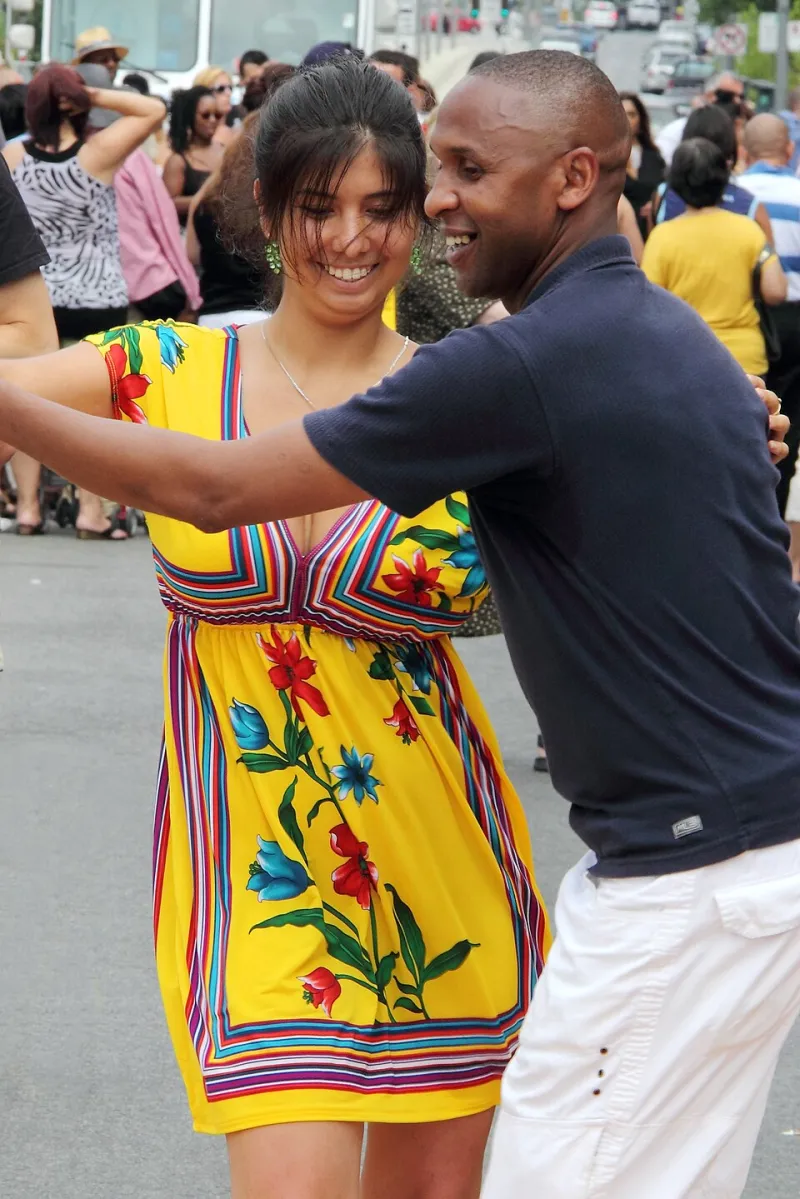
But the rooms that stay with you—the ones in Havana that run until the streets go quiet, and the handful in Britain that have learned the same trick—often look almost tame. Small steps. Soft knees. A hand resting, not gripping. A pause that lasts long enough to hear the clave. This is sencillo: simple, grounded, unadorned. It is not a beginner's compromise. It is a discipline.
The trick is not the point
Let's be clear: technique matters. Good timing, clean weight transfer and a working vocabulary of moves make dancing safer and more enjoyable. Nobody is arguing for a return to shuffling. But somewhere between the first eight-count and the advanced class, the UK scene has built a hierarchy in which the basic step is something you graduate from, the pause is a gap to be filled, and a dance without a showreel is somehow less serious.
That hierarchy is worth questioning. In Havana's late-night rooms, the social currency is not the length of your sequence. It is whether you can hold a conversation with the music. Dancers use fewer figures, but they use them better. They listen to the son, the timba, the bolero. They let the hips transfer. They stop. The room doesn't reward trickery so much as presence.
A UK scene hooked on homework
Britain has built one of the most organised Latin scenes in Europe. Weekly classes, weekenders, socials from Peckham to Leeds, Manchester to Bristol. That structure is a strength: it brings people in, builds technique and creates community. But it also encourages a classroom mindset. Dancers arrive at socials with homework. Teachers sell patterns. Promoters book shows. DJs cut tracks into drops. The message, unintended but clear, is that the point of the night is to demonstrate what you have learned.
The result is a floor full of people performing at each other rather than dancing with each other. You can see it in the grip, the speed, the frantic search for the next move. You can hear it in the music: edits that leave no room to breathe, songs shortened before a groove can settle. The basic step becomes filler. The pause becomes embarrassment.
What Havana's late rooms know
Havana is not a museum, and it would be a mistake to treat it as one. The city's nightlife is varied, commercial, messy and modern. But the best late rooms share an instinct: they trust the simple step. A couple can dance a whole song with a handful of figures and still hold the room's attention. Not because they are showing off, but because they are listening.
That listening shows up in the body. The step is smaller. The weight moves through the floor. The hips follow, not as a wiggle but as a consequence of transfer. The arms are loose. The eyes are up. There is space for a joke, a breath, a mistake. Sencillo is not a style of music or a fixed syllabus. It is a way of being on the floor: uncluttered, present, connected.
When UK dancers talk about authenticity, they often mean the right syllabus, the right song, the right shoes. But authenticity on the floor is less about provenance and more about attention. You can dance casino in a Birmingham social club or son in a Peckham bar and be completely authentic if you are actually with your partner and the music. You can also execute every advanced pattern perfectly and be nowhere near either.
Give the basic step a headline slot
If UK Latin nights want more feeling, the change has to come from the people who shape the room—not just the dancers.
DJs can let tracks run. A song needs time to unfold; a groove needs space to land. Less chopping, fewer drops, more trust in the long arc. Teachers can teach listening alongside patterns. A class that spends ten minutes on weight transfer and the pause is not a soft option; it is foundational. Promoters can protect floor time. A shorter showcase or one less performance can give the room back to the dancers. A no-phones corner would not hurt either.
And dancers can test the theory. Try a whole song with only the basic step, a lateral and one turn. Dance with someone you have never danced with and keep it simple. Count the pauses instead of the moves. Notice how much more you hear.
The pause is not empty
The irony is that simplicity is harder than it looks. A long sequence can hide a lack of connection. A basic step cannot. It exposes timing, balance, listening, ego. That is why it feels risky. But it is also why it feels good.
The UK Latin scene does not need to become Havana. It needs to remember what Havana's late rooms know: that the point of the night is not to prove how much you know. It is to share a rhythm with another person, in a room that has stopped rushing. Fewer moves. More feeling. The pause is the point.