Linen Lies: What People Actually Wear to a UK Latin Night
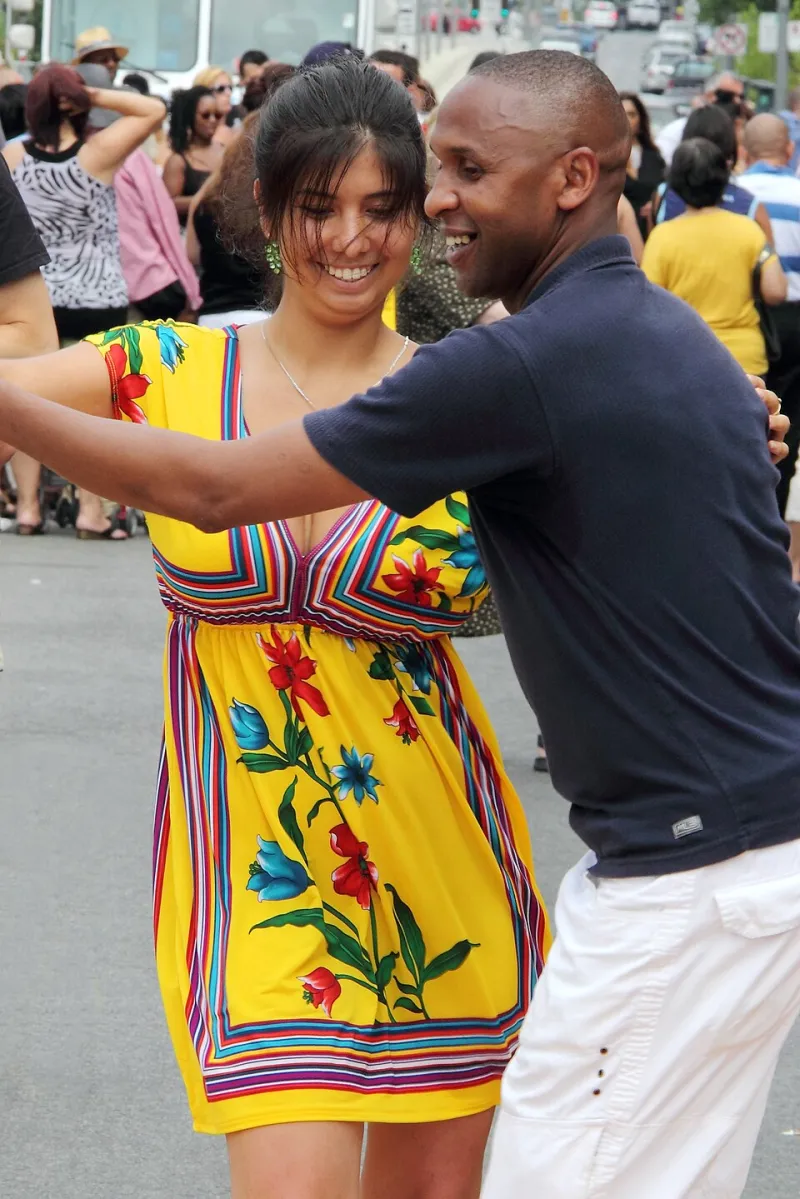
Photo: Ryan from Toronto, Canada, CC BY 2.0, via Wikimedia Commons
It is a Friday in October, half past eleven, and the queue outside a south London venue is a study in cheerful confusion. Two men in matching guayaberas are fanning themselves with the door menu. Behind them, a woman in a full-skirted dress and dance trainers is finishing a bag of chips. In front of them both stands a bloke in a vest and cargo shorts who has clearly come straight from the gym and is, by some distance, the most comfortable person in the line.
He will also still be dancing at two. The guayaberas will not.
The myth of the Havana wardrobe
Type “what to wear to a salsa night” into a search engine and you get the same mood board every time: ivory linen, panama hats, a cigar, a balcony at golden hour. It is a lovely fantasy and it has almost nothing to do with a night out in Manchester in February.
The guayabera deserves better than this, incidentally. It is a real garment with a real history — a working shirt of the Caribbean, pleats and pockets for a reason, built for heat and movement. Worn properly, with loose trousers and an open collar, it looks superb. The problem is not the shirt. The problem is treating it as fancy dress: paired with tailored shorts, sport socks and sandals, worn once and never again.
“We have had people turn up in full costume — guayabera, cigar in the breast pocket, the whole production,” says Yaz Adeyemi, who runs a monthly son and timba night in Peckham. “They last about twenty minutes and then they are standing by the door with the shirt hanging open. Meanwhile the people who actually dance are in a vest and loose trousers and they are still going at half one.”
What the floor actually looks like
Stand at the side of any UK Latin night in 2026 and take notes. You will see cotton, not silk. Dark colours, because sweat patches are democratic. Loose trousers, wide-leg jeans at a push, and a great many people who have learned the hard way that tight denim and a three-hour rueda do not belong in the same sentence.
On feet: trainers, mostly. Dance trainers if the person is serious, flat-soled fashion trainers if they are brave, and a small devoted minority carrying proper suede-soled shoes in a tote bag to change into once they are past the cloakroom. That tote bag is the single most common accessory in British Latin dancing and nobody talks about it.
“I have a pair of dance shoes that have never touched pavement,” says Dev, a regular on the Leeds salsa circuit. “They live in my bag. I change at the side of the floor, I put my trainers back on at the end, and I have never once regretted it. The people who regret things are the ones who wear new shoes straight out of the box.”
The trainer question
There is a quiet etiquette here, and it depends entirely on the floor. Purpose-built dance floors, whether marley or sprung wood, want suede or a dance sneaker — grip is the enemy, and knees are expensive. Concrete warehouse floors and sticky pub carpets are the opposite: you want a sole with a bit of give, and you want ankles that still work in the morning.
So ask. Promoters know their own floor and are usually delighted to be asked something that is not about the cloakroom.
Venue by venue cues
The converted warehouse. Concrete, high ceilings, no air movement whatsoever, and a bar at the far end. Dress as minimally as you can get away with. A breathable vest or a thin cotton tee, loose trousers, and a plan for where you leave your coat.
The pub function room. Low ceiling, sticky carpet, two overworked fans and a stage crammed into the corner. Layers are your friend here, because you will go from freezing at the door to overheating in eleven minutes flat. Something you can peel down without disappearing entirely.
The church hall or sports hall social. Cooler, more spacious, and the one setting where bringing proper dance shoes is unambiguously worth the bag space. Also the one place a collared shirt will not look out of place.
The hotel ballroom night. The smartest end of the UK scene, and still not a costume party. A clean collared shirt, dark trousers, polished shoes. No tie. Nobody has ever been turned away from a Latin night for wearing a plain shirt.
The festival tent in August. Everything sticks. Technical fabrics, a spare top, and a realistic attitude to the fact that you will be damp within the hour.
The three-item kit
If you take nothing else from this, take these: a small towel, a spare shirt, and shoes you have already broken in. The towel sounds excessive until your first two-hour social. The spare shirt turns a night that ends at midnight into one that ends at three. The broken-in shoes are the difference between dancing and sitting down.
The only rule that survives contact with a British dancefloor
Here is the opinion, plainly: there is no Havana dress code, and pretending otherwise makes the scene look like a theme night rather than a music scene. Wear the guayabera if you love it — wear it well, wear it with intent, and do not pair it with sports socks. Wear linen if the venue is warm enough to justify it, and skip it if you know you will be a damp crumple by eleven.
But the honest dress code of a UK Latin night is simpler than any mood board: you will be sweating within twenty minutes, so plan for it. Dress like someone who intends to still be there at the end.