The Floor Belongs to the Clumsy: Why UK Latin Nights Need to Chill About Technique
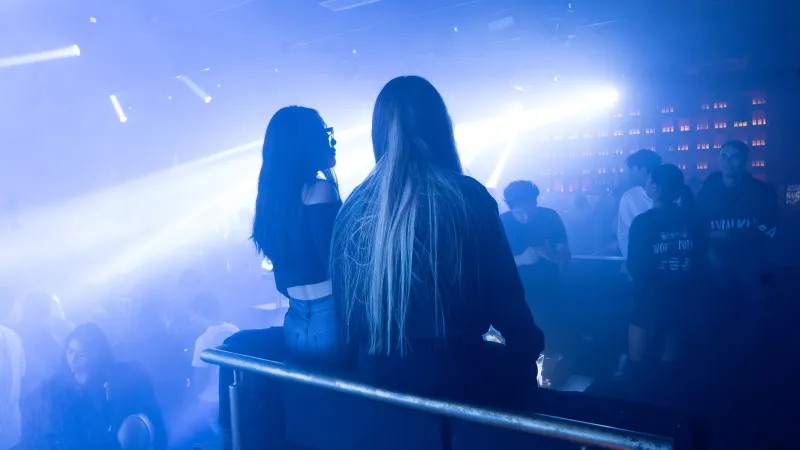
There is a moment at almost every UK Latin social that tells you everything about the room. It is not the first shine step, the perfectly timed rueda call or the couple in matching shoes who have clearly rehearsed. It is the person near the speaker who is doing something that roughly resembles salsa, grinning like they have just got away with something, and looking around to see if anyone minds.
Too often, someone does mind. Not loudly, not cruelly — just enough. A raised eyebrow. A quick turn away. A friend whispering that the floor is "a bit beginner" tonight. And that is how a party starts to feel like an audition.
The syllabus has eaten the social
Somewhere between the rise of the weekly class pipeline and the endless scroll of polished partnerwork clips, the UK Latin night acquired a syllabus it never asked for. Rooms now come with levels. Warm-ups come with corrections. Socials feel like the practical exam at the end of a term, except everyone has already seen the marking scheme online.
It is not that technique is bad. Good technique keeps knees intact and follows unbruised. But technique has become the entry fee, the small talk, the status system. Ask a stranger to dance and you can practically hear the internal risk assessment: are they going to count at me? Will they apologise for every missed handhold? Will they try to lead a move they saw in a reel and nearly take out a table?
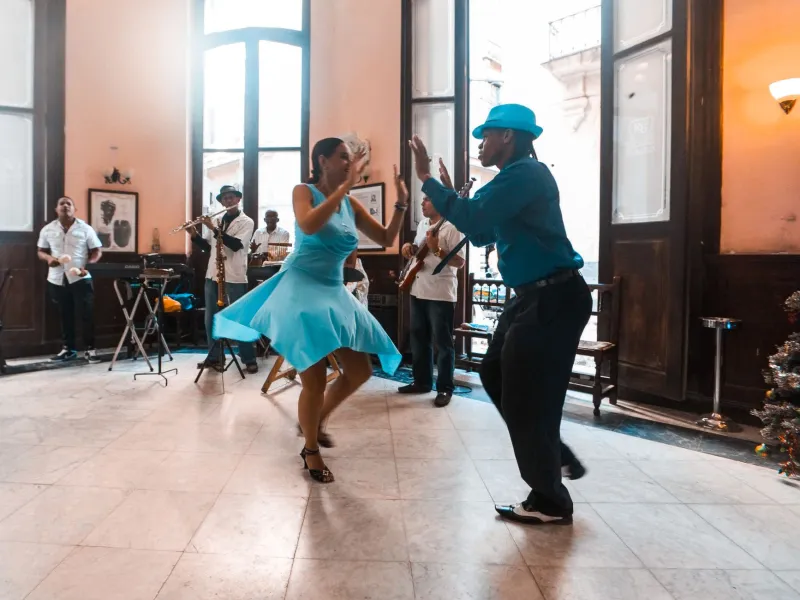
In Havana, the late-night floor is rarely this precious. The best rooms there are messy and mixed — aunties, teenagers, tourists with two left feet, someone who has been dancing since before the revolution, someone who has been dancing since the second rum. The rhythm is a conversation, not a certificate. Nobody is auditioning for a slot in a semi-pro team. They are out, it is late, and the music is good.
That looseness is not an excuse for sloppiness. It is a different priority. The room is built for participation, not performance.
We have built a floor with a velvet rope made of steps
UK Latin nights are not short of enthusiasm. From Leeds to Bristol, Manchester to Peckham, there are nights doing the hard work of building a scene in pubs, studios and community halls. But too many of them have inherited a quiet hierarchy. Advanced dancers cluster in the middle. Beginners hug the edges. The DJ plays a banger and half the room watches, waiting for a partner who will not judge them.
Signage does not help. "Advanced only" on a workshop is fair enough. "Advanced only" on a social floor is a mood killer. It tells people who have paid to be there that they are visitors in their own night out. And the phrase "beginners welcome" often means "beginners welcome until the music speeds up and the real dancers arrive".
There is also the first-song problem. The opening thirty minutes of a UK social are often the most awkward of the night: too empty to hide in, too early to leave, too self-conscious to relax. Newcomers arrive, hover, buy a drink, check their phone, and quietly decide that next time they will come later — or not at all.
That is not a crowd problem. It is a design problem.
Three fixes that would make 2026 feel more like a party
None of this needs a rebrand or a bigger budget. It needs a few deliberate choices.
1. Give the beginner corner a better name — and a better spot
A beginner-friendly corner should not be a naughty step. Put it near the DJ, not by the toilets. Call it the "warm-up floor" or the "slow lane" or, better still, do not label it at all — just programme the first hour with slower tempos, simpler grooves and a DJ who understands that a room can be taught to relax. If teachers are in the building, ask them to dance with people who are clearly new rather than only with each other. A five-minute turn from an instructor can change someone's whole night.
2. Ban "advanced only" from social floors
Classes can have levels. Socials cannot. If a move is too complicated for the room, the room is too complicated for the move. Let the advanced dancers be visibly bad at something else for a change. Let them dance with beginners without turning it into a rescue mission. The quickest way to make a scene feel exclusive is to keep telling people they are not ready yet.
3. Introduce a first-song amnesty
The first song after the doors open is a free pass. No counting. No correcting. No "let's try that again". You dance with whoever is nearby, you laugh when it goes wrong, and you stay on for the second song because the pressure is off. Announce it. Put it on the flyer. Make it a ritual. It gives the room permission to be unpolished before the polished people arrive.
The bad dancer is the canary in the room
A Latin night that cannot accommodate a bad dancer is a Latin night that has forgotten what it is for. The unpolished feet are not a problem to be solved by more workshops. They are the proof that the room is still alive, still social, still capable of surprise.
Havana's after-dark pulse is not a technical standard. It is a permission slip. It says: come in, sweat, make a mistake, stay for one more. UK rooms can borrow that without pretending to be the Malecón. They just need to stop treating the floor like a stage and start treating it like a party again.
So bring back the bad dancer. Give them a corner, a slow song and a room that does not flinch. The rest of us will follow.