The Cloakroom Covenant: What Happens When a Latin Floor Goes Screen-Free After Midnight
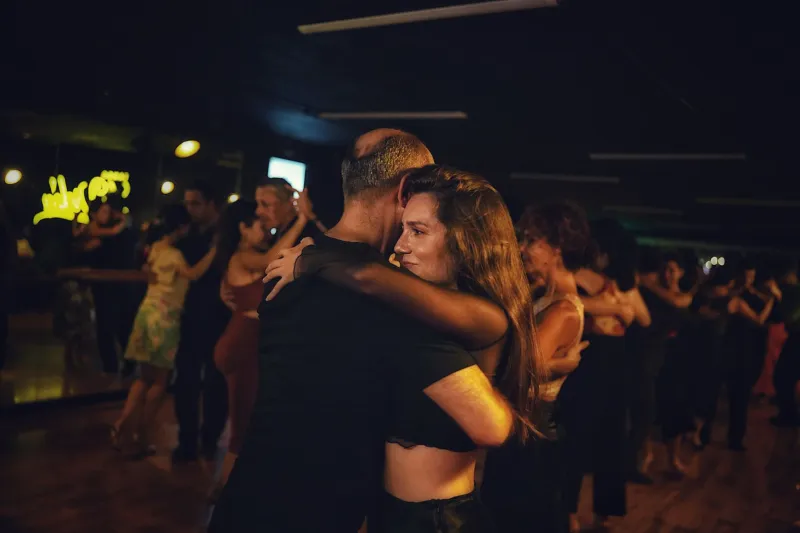
At half past midnight in a good UK Latin room, something odd happens. The floor is full, the horns are bright, and yet a small forest of arms rises above the crowd — not to clap, but to frame. Someone is filming the couple in the corner. Someone else is filming the DJ. A third person is filming themselves not quite dancing. The music has not stopped, but the room has quietly acquired an audience, and the audience is holding phones.
This is not a rant about young people or social media. It is an observation about atmosphere. A Latin night lives or dies on a particular kind of attention: eyes on a partner, ears on the clave, weight in the hips, a willingness to look slightly foolish in front of strangers. Phones do not destroy that attention, but they do split it. They turn a dance floor into a backdrop and a night out into content. And the best Havana-style moments — the ones that make you text your friends the next morning — are almost never the ones that got posted.
Hence the cloakroom covenant: a simple after-midnight ritual at UK Latin nights where phones go into the cloakroom for one hour. Not confiscated. Not policed. Voluntarily checked, like a coat, with a ticket and a smile. The room gets a screen-free hour; the dancers get their hands back.
The Room Changes When the Lenses Go Down
Watch a busy floor when a phone comes out. The couple keeps dancing, but the dance changes. Angles get adjusted. Faces get composed. Someone checks whether the light is flattering. The rhythm is still there, but it is no longer the only thing in the room. The camera has introduced a third partner, and that partner is demanding.
Take the cameras away and the floor gets looser. Not immediately — the first ten minutes of any phone-free experiment are always a bit self-conscious, like a party where the WiFi has dropped. Then something shifts. People talk to each other between tracks. Dancers make mistakes and laugh instead of checking whether it was captured. DJs read the room more clearly because the room is no longer half-looking at a screen. The atmosphere becomes less performative and more communal, which is the whole point of a Latin night in the first place.
This is not nostalgia for a pre-smartphone golden age. Dancers have been showing off for as long as there have been dance floors, and there is nothing wrong with wanting to remember a brilliant night. But there is a difference between a memory and a recording. A recording is proof. A memory is participation. UK Latin nights are short on the latter and drowning in the former.
Make It a Handover, Not a Punishment
The quickest way to ruin a phone-free hour is to make it feel like a school rule. Nobody wants a bouncer wagging a finger at a hen party, and nobody wants a promoter lecturing a room about mindfulness. The cloakroom covenant has to feel like a gift the night is giving itself, not a test that dancers are failing.
That means a few practical things. Put the phone check next to the coat check, staffed by the same friendly people, with proper numbered tags and a clear collection point. Announce it once, warmly, from the stage or the door: from half past midnight until half past one, the cloakroom is open for phones, and the floor is open for dancing. Use a musical cue to mark the start and end — a horn line, a change in tempo, a favourite son that everyone knows. Keep it optional. If someone needs their phone for a taxi, a babysitter, a health condition, or a work call, they keep it, and nobody makes a thing of it.
Promoters should also resist the urge to sell the hour as a stunt. No prizes for the most phone-free dancer. No photographer roaming the edge of the floor to document the unplugged magic. The point is not to replace one lens with another. The point is to let the hour be ordinary, unremarkable, and therefore real.
What DJs and Hosts Can Do
DJs have more power here than they might think. A room follows the tone of the person behind the decks. If the host makes the cloakroom covenant sound like a curfew, the crowd will resist. If they make it sound like the best part of the night is about to start, people will try it.
Small moves help. A host can say that the next hour is for the dancers, not the feed. A DJ can play a set that rewards attention — long builds, live percussion, a few tracks that are too strange to shazam and too good to ignore. The lights can come down a notch and the mirrors can stay uncovered, because people still want to see each other. What they do not need is a countdown clock on the wall. The hour should feel like a stretch, not a sentence.
Staff should model the behaviour, too. If the cloakroom team is warm and quick, the ritual becomes normal. If the security team treats every phone like a weapon, it becomes a confrontation. The difference is entirely in the welcome.
The Moments You Cannot Post
The irony is that the hours people are most likely to remember are the least likely to be filmed well. A stranger showing you how to find the clave. A rueda that collapses into laughter. The last twenty minutes before the night bus, when the floor is half empty and the DJ plays something slow and ridiculous because the room has earned it. These moments are not photogenic. They are atmosphere, and atmosphere is mostly made of things that evaporate when you try to capture them.
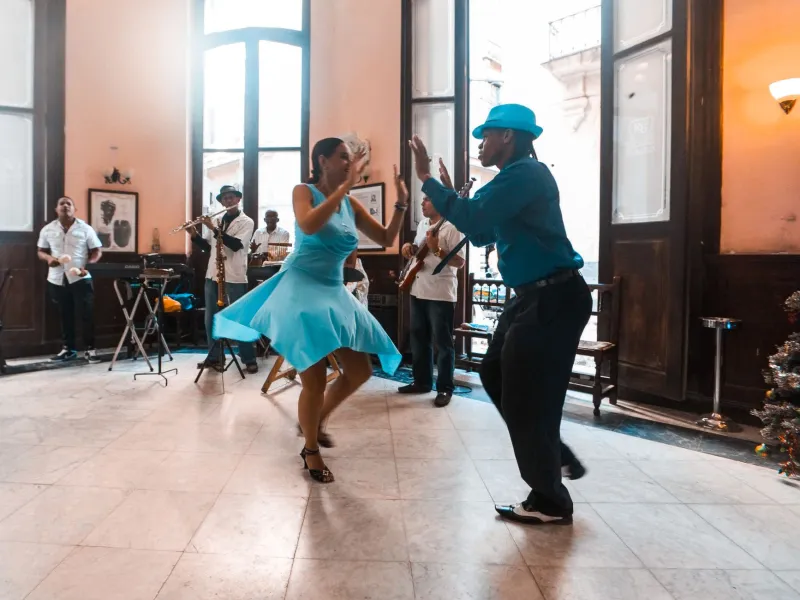
Havana has always understood this better than most. The city's nightlife is not built around documentation; it is built around being there. A doorway, a courtyard, a kitchen table with a radio — the best nights are the ones that leave no evidence except a sore pair of calves and a story you tell badly the next day.
UK Latin nights do not need to become Havana. But they could borrow one idea: an hour after midnight when the phones go into the cloakroom and the floor becomes the only screen in the room. Try it once this winter. If it feels like a punishment, drop it. If it feels like a holiday, keep it. The best moments are the ones nobody captures — and that is not a loss. That is the whole night.