What Hits You at the Door: Building a Signature Scent for UK Latin Nights
Walk into a late room in Havana and your nose clocks in before your eyes do. Coffee grounds, citrus peel, cedar from old shutters, a bit of street air pushing through a doorway. It is not a perfume. It is a place. Walk into a lot of UK Latin nights and the story is thinner: fog fluid, a faint ghost of last week's mop, and whatever the bar smells like when the glasswasher is mid-cycle. We talk endlessly about the music, the floor, the door, the lighting. We almost never talk about the smell. That is a missed trick, and an affordable one.
The layer nobody budgets for
Scent is the fastest route to memory. It also sets the pace of a room before anyone has taken a coat off. A sharp citrus lift at the door says you are somewhere now. A warm coffee note near the bar says stay a while. The wrong smell — bleach, stale beer, aggressive air freshener — says this is a function room. None of that is about spending more. It is about deciding what your night should feel like at 1am and working backwards.
The good news for promoters is that this is one of the cheapest production layers available. The bad news is that it is also one of the easiest to get wrong. Douse a room in essential oils and you have not created atmosphere, you have created a headache with a door policy.
Start with what is already there
Before adding anything, smell your own night honestly. Go in early, before the doors open. Note the cloakroom, the bar, the toilets, the walk from the entrance to the floor. Most British venues have three default smells: cleaning products, cold air from the extractor, and the ghost of whatever was served at lunch. You cannot build a signature on top of those until you have dealt with them.
Ask the venue what they use and when. A mop-down an hour before doors is fine; a mop-down ten minutes before doors with a pine-scented cleaner is a message you did not mean to send. Simple fixes: ask for unscented cleaning products where possible, ventilate before the room fills, and keep the toilets on a separate, lighter routine. This is not glamorous. It is the foundation.
A four-step scent journey
You do not need a perfumer. You need a plan that moves with the night.
Door. Something bright and clean: fresh citrus peel in a shallow bowl near the welcome table, or a very light citrus-and-herb diffuser on a timer. This is the handshake. Keep it subtle. If people can name the smell from three metres away, it is too loud.
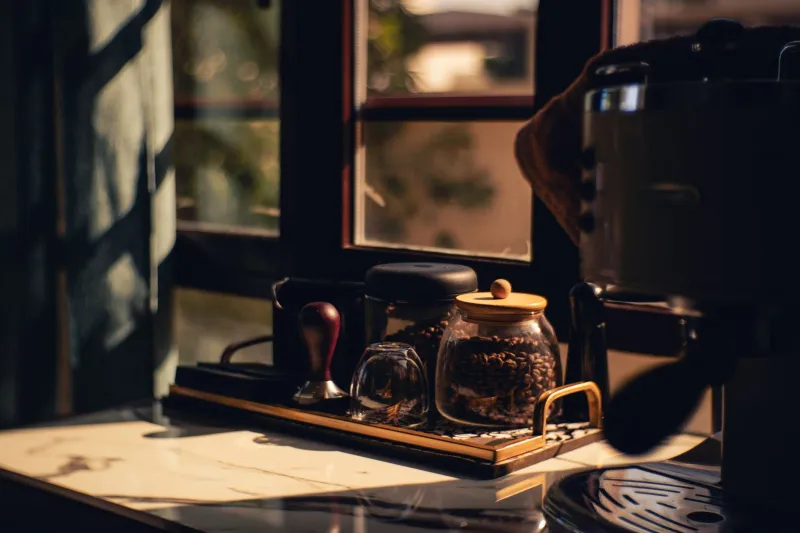
Cloakroom and bar. This is where warmth belongs. A small dish of coffee beans behind the bar, refreshed through the night, gives that Havana-adjacent roasted note without any machinery. A few dried orange slices in a jar do the same job cheaply. If you want cedar, use a small block or chips in a cloth bag rather than a spray — it reads as furniture, not air freshener.
Floor. Here, less is genuinely more. Bodies, warmth and movement do most of the work. A very faint woody or resinous note in the air near the edges of the floor is enough. Avoid anything sweet or heavy near the speakers; it clings to clothing and turns stale by 2am. This is where most scent experiments fail — not because the idea is wrong, but because the dose is too high.
Exit. A small bowl of citrus peel again by the door, or a light herbal note near the cloakroom. The last thing people smell should match the first thing they smelled. It closes the loop and makes the night feel designed rather than accidental.
The allergy question
This is the part that separates a thoughtful scent layer from a careless one. Essential oils are not neutral. Some people have asthma, migraines, skin sensitivities or fragrance allergies, and a UK Latin night should not become a place they have to leave. A few rules will save you trouble.
- No spraying on the floor, on fabrics, or into the air near the dancefloor. Diffusers on timers, bowls of dry ingredients and cloth bags are far gentler.
- Keep it low. Dilute properly if you are using oils at all, and never top up mid-night because you can no longer smell it. Your nose has simply adjusted.
- Ventilate. A scent layer in a sealed room is a fug. A scent layer in a room with air movement is an atmosphere.
- Say it in the promo. A short line on the event page — “light citrus and coffee notes in the room” — lets people plan. It also signals that you have thought about it.
- Check with the venue. Ask about their risk assessment, their cleaning products, and whether anything in the room is scented already. You are adding a layer, not replacing one.
UK rooms getting it right
You can see the instinct in small rooms rather than big ones. A Tuesday rumba in a Leeds basement where the door person keeps a bowl of orange peel by the till. A Bristol supper club that puts ground coffee behind the bar and nothing else. A London members' room that uses cedar blocks near the cloakroom and lets the rest of the night smell of people and music. None of these are expensive. All of them feel considered.
The opposite is also easy to spot: a room that smells of vanilla plug-in and desperation, or one that smells of absolutely nothing, which is somehow worse. A Latin night with no scent signature is a night that has not decided what it is. Havana's rooms do not have that problem. They smell like coffee, fruit, wood and the street. Yours can too — quietly, cheaply, and without a single allergy complaint.