Under the Arches, Behind the Curry House: The Improbable Buildings That Make UK Latin Nights
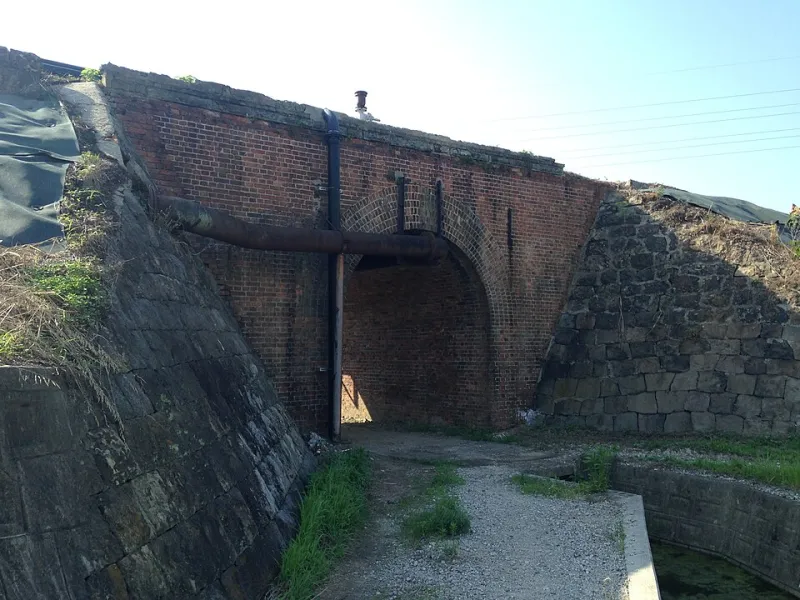
Photo: そらみみ (Soramimi), CC BY-SA 4.0, via Wikimedia Commons
There is a night in Digbeth that happens under a brick railway arch, and when the timbales come in you can feel the barrel of the room push the sound back at you. There is one in a former chapel in Sheffield where the congas disappear into thin air in the most frustrating way. There is one behind a curry house in a northern suburb where the horns sound better than they do in a purpose-built club with a thirty-grand rig.
None of these buildings were built for dancing. That is precisely what makes them worth going to.
Why the building always gets a vote
A promoter can spend a fortune on a sound system and lose it all to physics. Low frequencies are long. A room twenty metres long with a hard ceiling will hold a bass note for far too long, and there is no dial on the desk that fixes it. High ceilings give you reverb. Carpets eat everything above 4kHz. Concrete gives you a slap off the back wall that arrives after the drummer has already moved on.
Purpose-built clubs solve this with geometry, absorption and money. Everyone else solves it with placement, restraint and a bit of cunning. The results are frequently stranger, and often better.
The converted chapel
You know it by the door: a stone porch, a noticeboard with old notices still pinned under glass, and then a room that opens upward into nothing. Nonconformist chapels were designed so a single voice could reach the back row without amplification. Which means every conga and every horn is now amplified, whether you asked for it or not.
Bass is the casualty. In a tall stone room, low end turns to porridge — it rolls around the gallery and arrives late at the floor. The fix is counter-intuitive: fewer subs, not more. Keep the drums low and close, let the horns use the room's natural gift, and resist the urge to fill the height. Wooden galleries, if they survived the conversion, will do more for the sound than anything in the rack.
What you get in return is a floor that feels ceremonial. People dance differently in a chapel. They stand up straighter.
The back room of the curry house
Follow the corridor past the kitchen, past the smell of cumin that will be in your coat until Wednesday, and you find a function room with a low ceiling, patterned carpet and a capacity of ninety if nobody breathes in.
Acoustically this is a gift and nobody expects it. Carpet and soft furnishing kill reflections, so the room is dead and dry and the horns land clean. Vocals are audible at the back for the first time all year. Percussion sounds tight because there is nothing for it to bounce off.
The problems are bass — which has nowhere to go and turns muddy under the tables — and heat, which arrives by ten and never leaves. Bring a small sub, cross it over high, and put the drums on the floor rather than a stage so the low end couples with the room instead of floating above it.
You will leave smelling of cardamom. That is the price of the best horn sound in the city.
The multi-storey car park
Level four, oil stains, a view over the ring road, and a sound that is genuinely extraordinary for about forty minutes before the temperature drops.
Concrete is dense and reflective, so percussion becomes enormous — claps, shakers, cowbells, the whole top of the kit arrives at the back wall with interest. Horns are thrilling. Speech is hopeless, which is why nobody bothers making announcements and why car park nights often have the best atmosphere of any in the country: there is nothing to do but dance.
The enemy is not the acoustics but the air. Open sides mean wind, and wind means a cold floor by one in the morning. Successful car park nights zone the space — one end for sound, one for the bar, a calm pocket for people who need to sit — and accept that the whole thing runs on a shorter fuse than a basement.
The railway arch
The arch is the closest thing Britain has to a Havana courtyard, minus the weather. A brick barrel vault gives you a curved ceiling, which means standing waves at particular frequencies. Walk the room with a bassline running and you will find a spot where the low end doubles and a spot three feet away where it vanishes entirely.
Promoters who know their arch place the kit against the curve rather than the flat end, break up the longest wall with drapes or a bar, and move the DJ off centre so the bass does not fire straight down the tunnel. Get it right and the room has a natural compression, a tightness, that you cannot buy.
Get it wrong and the whole night sounds like it is being played in a drain. It is a coin toss, but the good side of the coin is very good.
The working men's club
The suspended ceiling, the strip lights, the stage with the curtain that has not opened since 1987, the sticky carpet with a pattern that has absorbed four decades of beer. Structurally, a social club is the most honest room in the country.
It was built for entertainment, just not this entertainment. The stage is a real stage, which means a live band sounds better here than in most clubs — the room is shallow, the ceiling tiles absorb just enough, and the audience is close. Bands that play these rooms routinely say they can hear themselves for the first time in months.
The trick is lighting. A room that was designed to be lit for bingo needs to be re-lit for dancing, and the difference between a grim social club and a great night is often four lamps and a bit of fabric over the fluorescent strip above the bar.
What the building teaches you
Walk the room with a horn player before you book the rig. Tune the room, not the graph on the laptop. Put the drums where the floor couples with them. Accept that some rooms will eat a bass note and design the set around it rather than fighting it. And never assume a purpose-built club is automatically better — the best sound in your city is quite likely coming out of a room with a fire exit sign and a smell of frying onions.
Character is not an accident. It is what happens when a promoter stops apologising for a difficult building and starts listening to it.